
Shoulder pads on backpacks, messenger bags, and laptop bags play a bigger role in comfort than most people realize, especially during long carries. Two common approaches dominate the market: traditional foam (sponge) pads and air-cushion (airbag) pads. Here’s a straightforward, side-by-side look at how they differ in real-world use.
1. Structure and How They Work
Foam shoulder pads These use open-cell or closed-cell polyurethane foam, EVA, or similar materials. Cushioning comes from the foam’s own elasticity as it compresses under load. The design is simple and has been the default for decades.
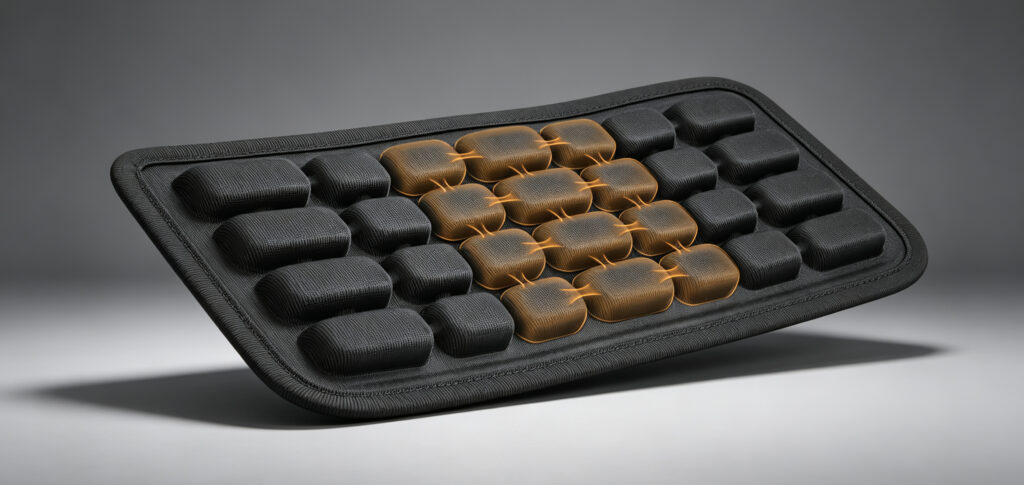
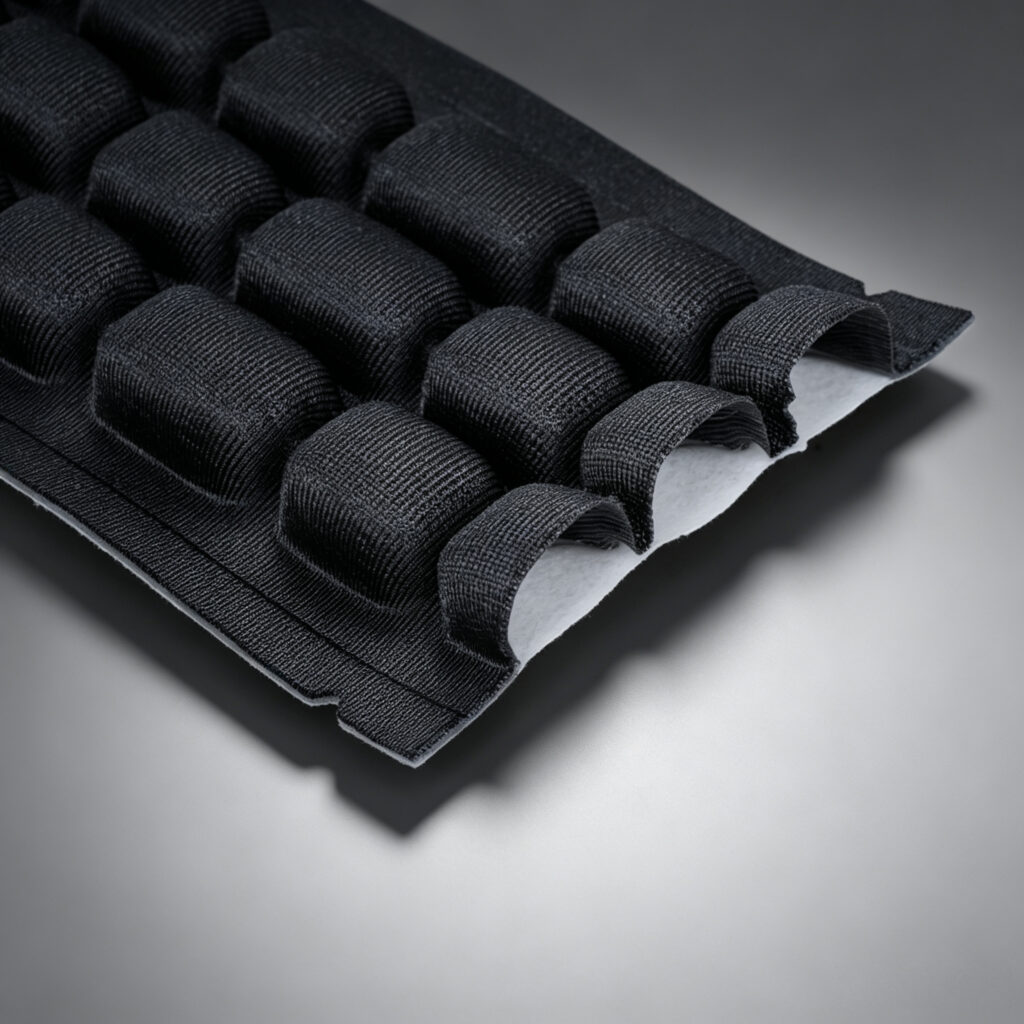
Air-cushion shoulder pads These contain one or more air chambers (air cells). Pressure is distributed through the compression and movement of air. Some designs use fully independent cells; others connect the cells so air can flow between them. A few products also include a thin foam layer for shape retention or to prevent bottoming out. Horizontal and vertical cell layouts are common in patents and commercial products—they provide both cushioning and a degree of anti-slip friction.
2. Comfort and Pressure Distribution
Foam pads usually feel soft at first and conform reasonably well. Over time, however, the foam can permanently compress in high-pressure zones, creating localized pressure points on the shoulders.
Air-cushion pads generally spread load across a larger contact area because the air moves and the pad deforms dynamically. Connected-cell designs tend to offer better overall conformity; independent-cell designs provide more stable local support and are less likely to lose firmness in one spot when another is heavily compressed. In both cases, the result is often less focused pressure during extended wear compared with basic foam.
3. Breathability and Heat Build-Up
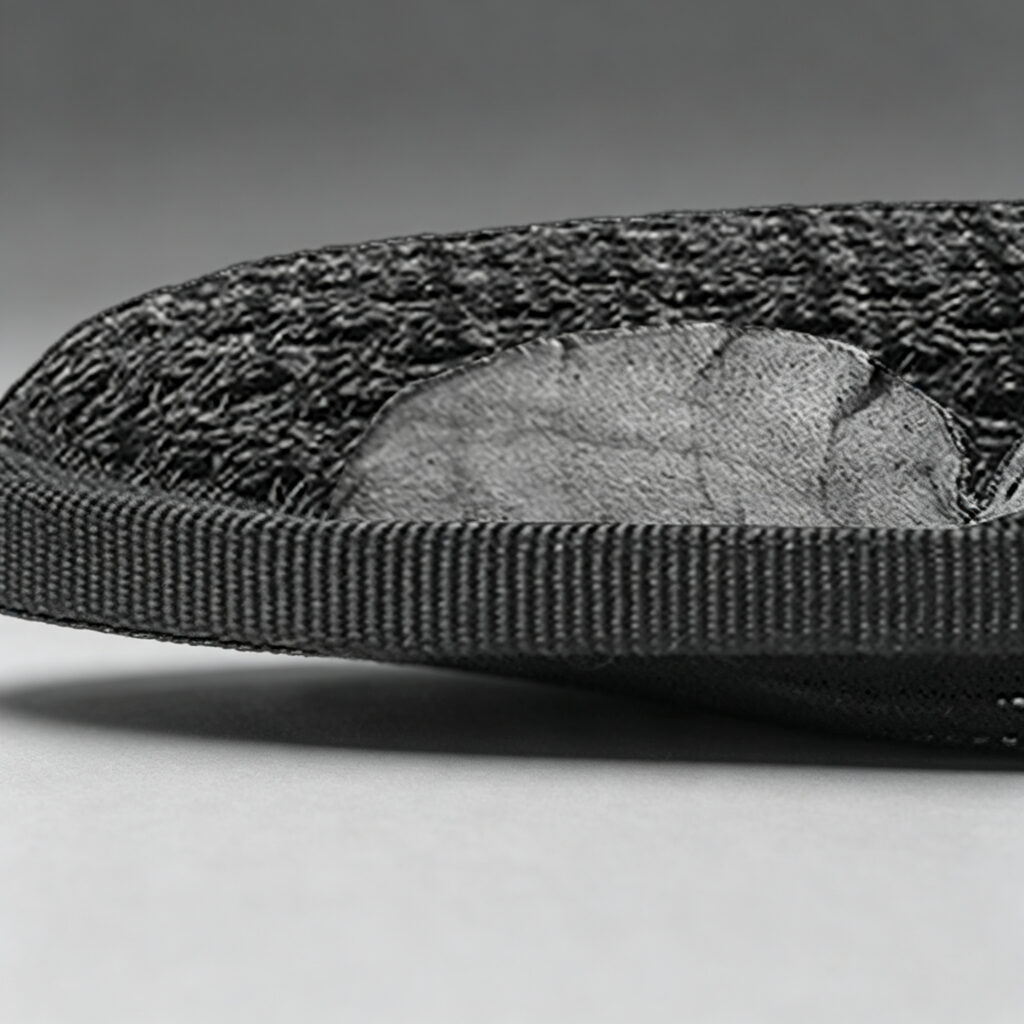
Foam’s porous structure allows some airflow, but once the pad is pressed firmly against the body it can trap heat and moisture. In warm or humid conditions this often leads to noticeable sweating.
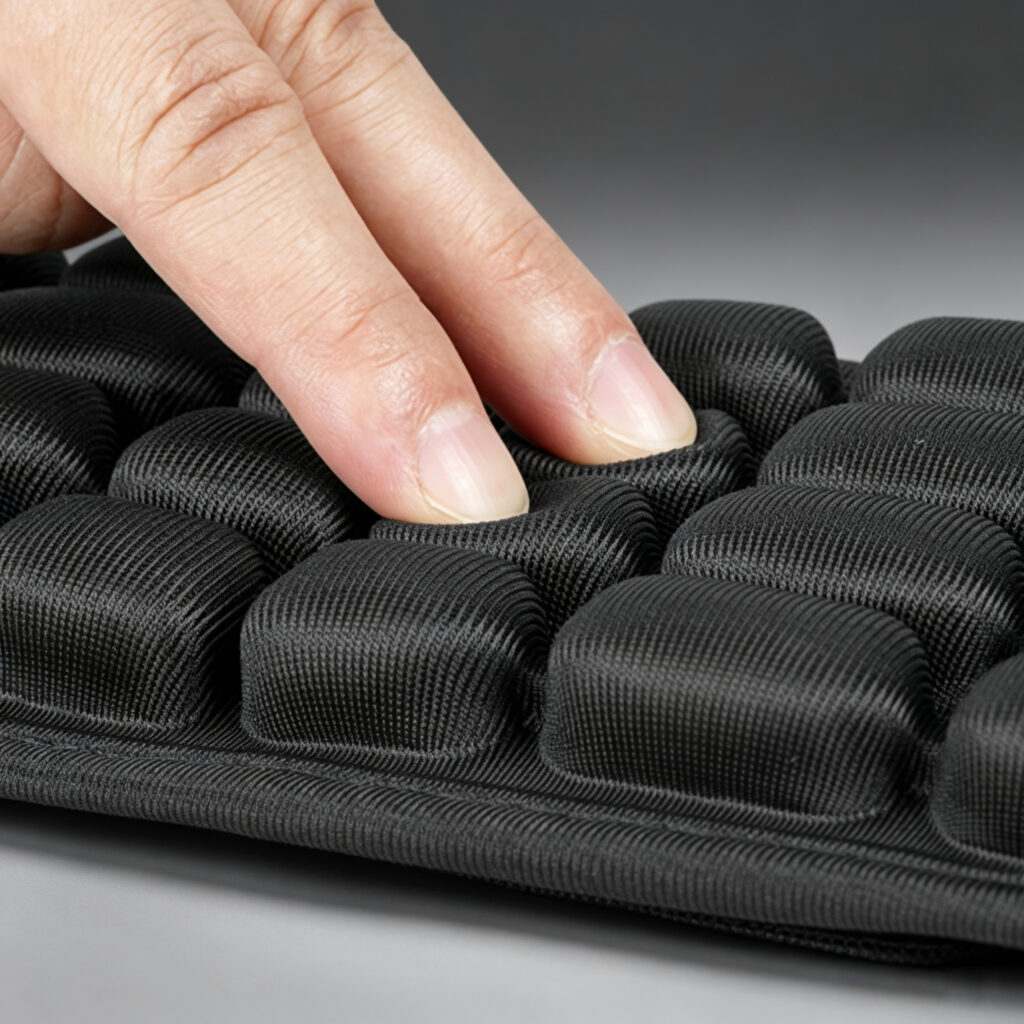
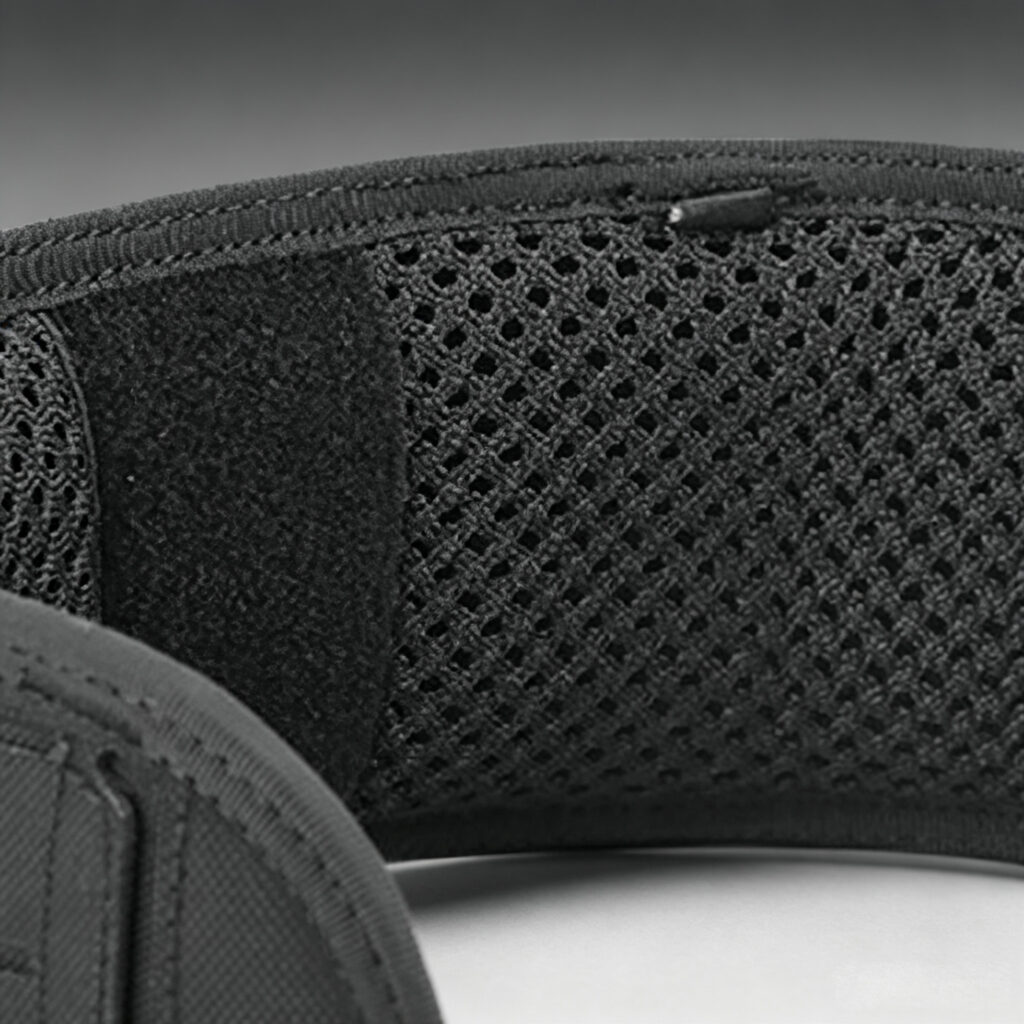
Air-cushion designs frequently incorporate channels or grid-like structures that allow air to circulate between cells. Many users find they stay cooler and drier on the shoulders, especially during longer carries in hot weather.
4. Durability and Maintenance
Foam pads require almost no maintenance and can usually be wiped or washed. Their main limitation is gradual compression set—after months or years of regular use the cushioning becomes thinner and less effective. Higher-density foams last longer but still eventually lose resilience.
Air-cushion pads maintain their support characteristics longer as long as the seals remain intact. The primary risks are punctures, valve failure, or seam leaks. A leaking pad loses most of its cushioning benefit. Occasional checks of air pressure and integrity are therefore useful. Some designs can be repaired; others cannot.
5. Weight, Packability, and Cost
Weight: Differences are usually modest. Well-made examples of both types are comparable; a few ultra-light air designs can be slightly lighter.
Packability: Foam pads keep a fixed volume. Air pads can be partially deflated for more compact packing.
Price: Foam pads are generally less expensive and widely available at entry-level price points. Air-cushion pads tend to cost more because of the more complex construction and sealing requirements.
6. Which Situations Favor Each Type
| Factor | Foam pads tend to suit better | Air-cushion pads tend to suit better |
| Usage intensity | Daily commuting, short trips, light loads | Long carries, heavier loads, outdoor or tactical use |
| Climate | Mild or dry conditions | Hot, humid environments |
| Budget | Cost-sensitive buyers | Willing to pay more for better pressure distribution |
Summary
Neither design is universally superior. Foam pads remain a practical, low-maintenance, and affordable choice for everyday light-to-moderate use. Air-cushion pads typically deliver more even pressure distribution and better ventilation, which many people notice during longer or heavier carries, but they come at a higher price and require a bit more attention to air integrity.