
The Threat Inside Your Own Gear
When we talk about body armor, we talk about stopping bullets. NIJ ratings. Ceramic plates. Backface deformation. These are the metrics that matter — until you’ve worn a plate carrier for six hours in a tropical climate, or finished a 12-hour patrol shift soaking through your undershirt.
Then you realise: the enemy inside your vest can be just as dangerous as the one outside.
Heat stress in body armor is no longer a niche concern. In 2026, it has become one of the most actively researched challenges in personal protective equipment. Military agencies, law enforcement procurement teams, and tactical gear manufacturers are all racing to solve the same problem: how do you keep a human body regulated when it’s wrapped in ballistic material that traps heat, blocks airflow, and adds kilograms of compressive weight?
The answer is changing fast — and officers and soldiers who understand this technology will have a significant edge.
Why Body Armor Makes Heat Stress Worse
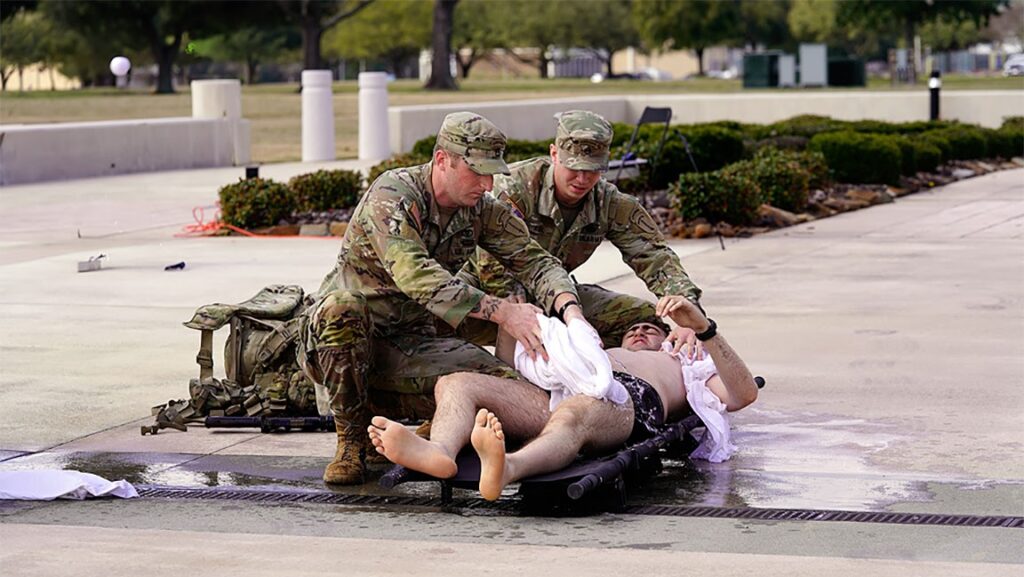
The human body cools itself through sweat evaporation. It is a remarkably efficient system — but only when airflow reaches the skin.
A standard ballistic vest or plate carrier creates a sealed microclimate between the armor and the torso. Sweat cannot evaporate. Heat cannot escape. Body core temperature rises faster than it would without the vest, even at moderate activity levels.
The effects are well documented:
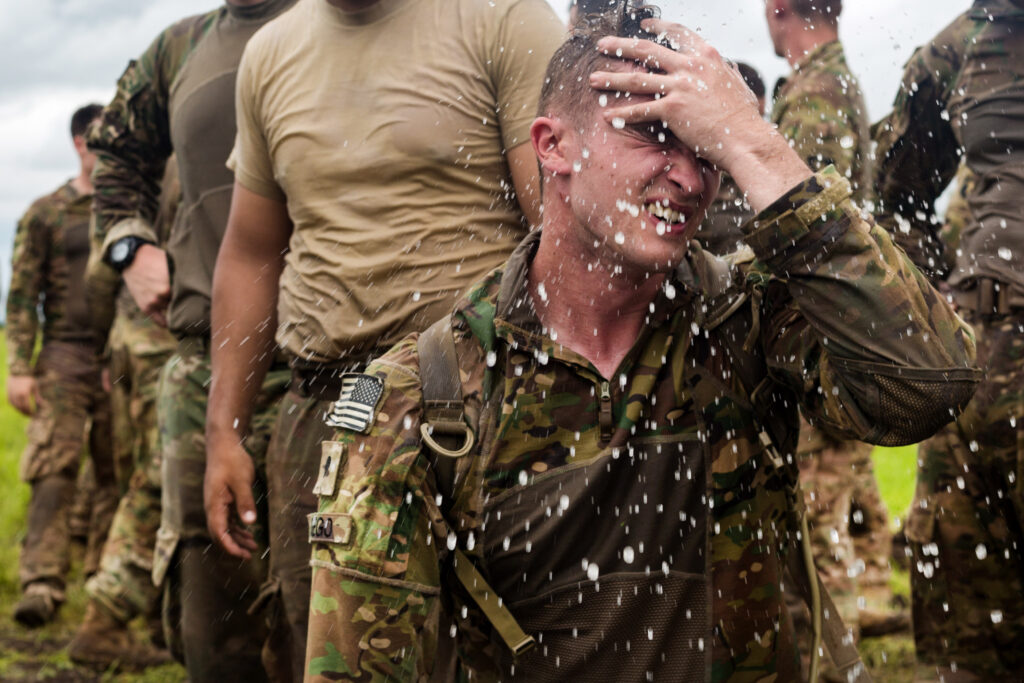
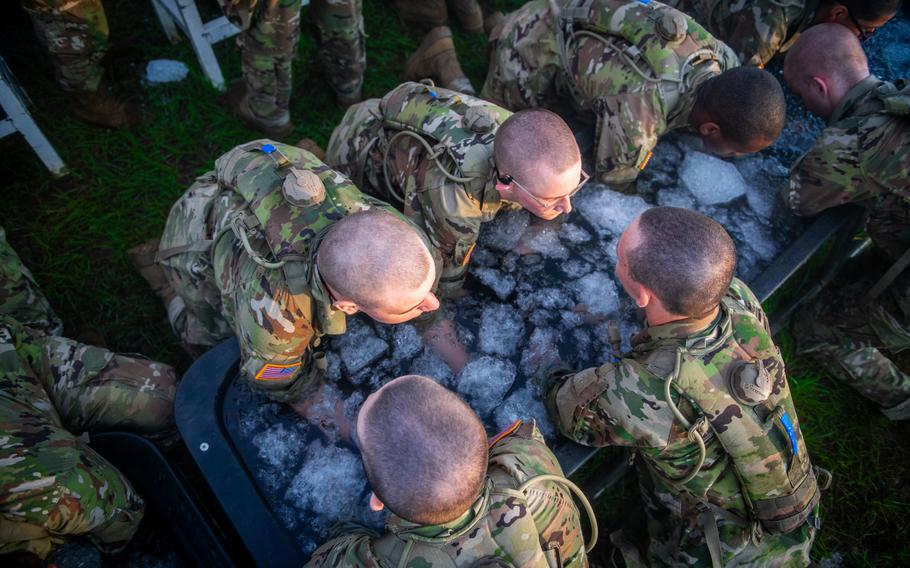
- Cognitive decline begins when core body temperature rises just 1–2°C above baseline
- Physical performance drops significantly within the first 30–45 minutes under load in warm conditions
- Decision-making speed — critical in tactical situations — is measurably impaired by heat fatigue
- Heat rash and skin infections are a persistent issue for officers wearing concealable armor daily, caused by constant moisture trapped against the skin
This is not a comfort issue. It is a performance and safety issue. And traditional armor design has largely ignored it.
What the Industry Is Doing About It in 2026
The body armor sector has reached a turning point.
The 2026 Body Armor Innovation Award finalists included multiple entries focused specifically on thermal management — a category that barely featured five years ago. Australian Defence Apparel’s ENFORCR® H.A.L.O. X Carrier introduced integrated microclimate-regulating padding. The Ace Link Armor Thermacore® System offers passive thermal regulation through engineered materials.
The direction is clear: thermal management is now a core design requirement, not an optional upgrade.
However, most solutions on the market today fall into two categories, each with significant limitations:
1. Passive mesh or spacer fabric systems These create a small air gap between the armor panel and the body. They reduce direct contact and allow minimal airflow. The limitation: they are static. Under compression from straps or weight, the gap collapses. In high-humidity environments, they provide almost no real benefit.
2. Active electric cooling systems Fan-driven systems, liquid-cooled inserts, and similar active solutions do work — but they require batteries, add weight, need charging, and can fail in the field. For law enforcement on patrol or military in remote operations, a system that needs a power source is a system that will eventually let you down.
The Air Convection Approach: Dynamic, Passive, and Reliable
There is a third approach — one that addresses the core physics of the problem without adding electronics, batteries, or complexity.
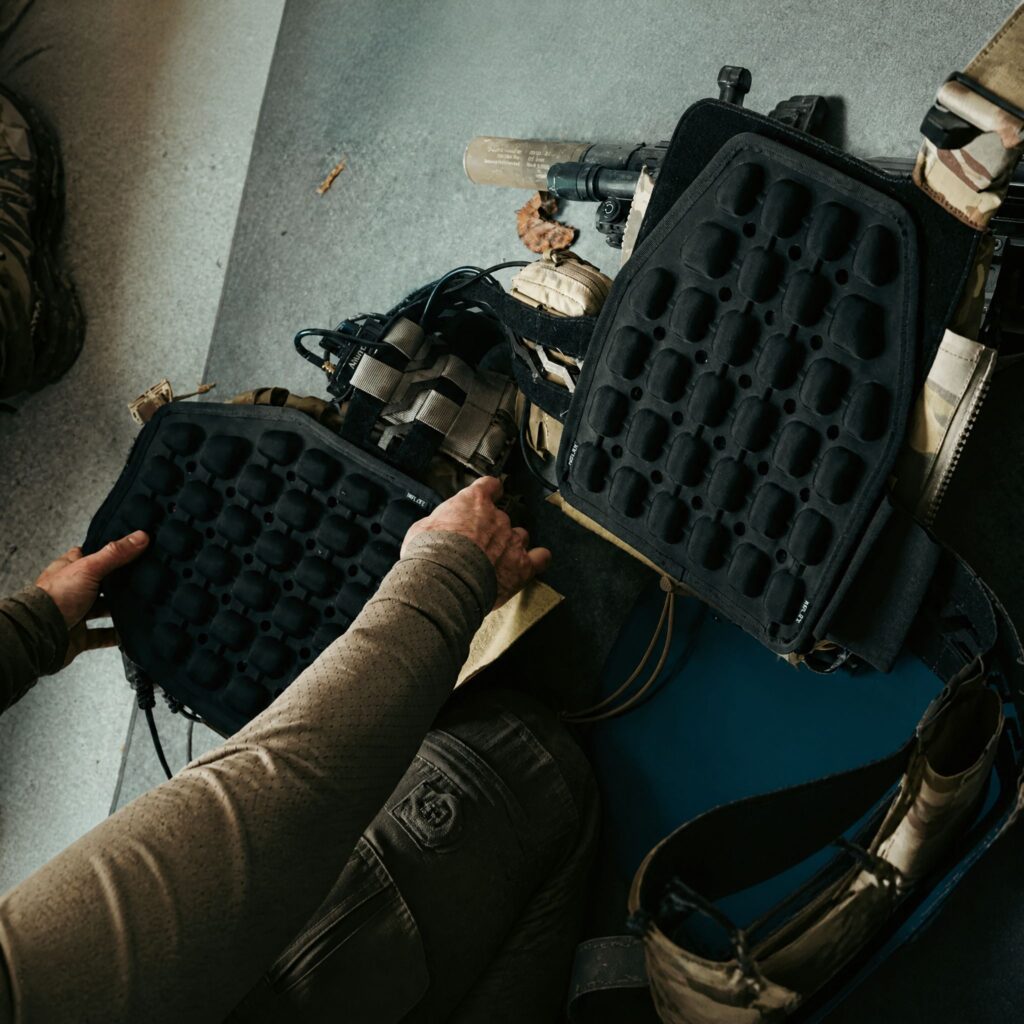
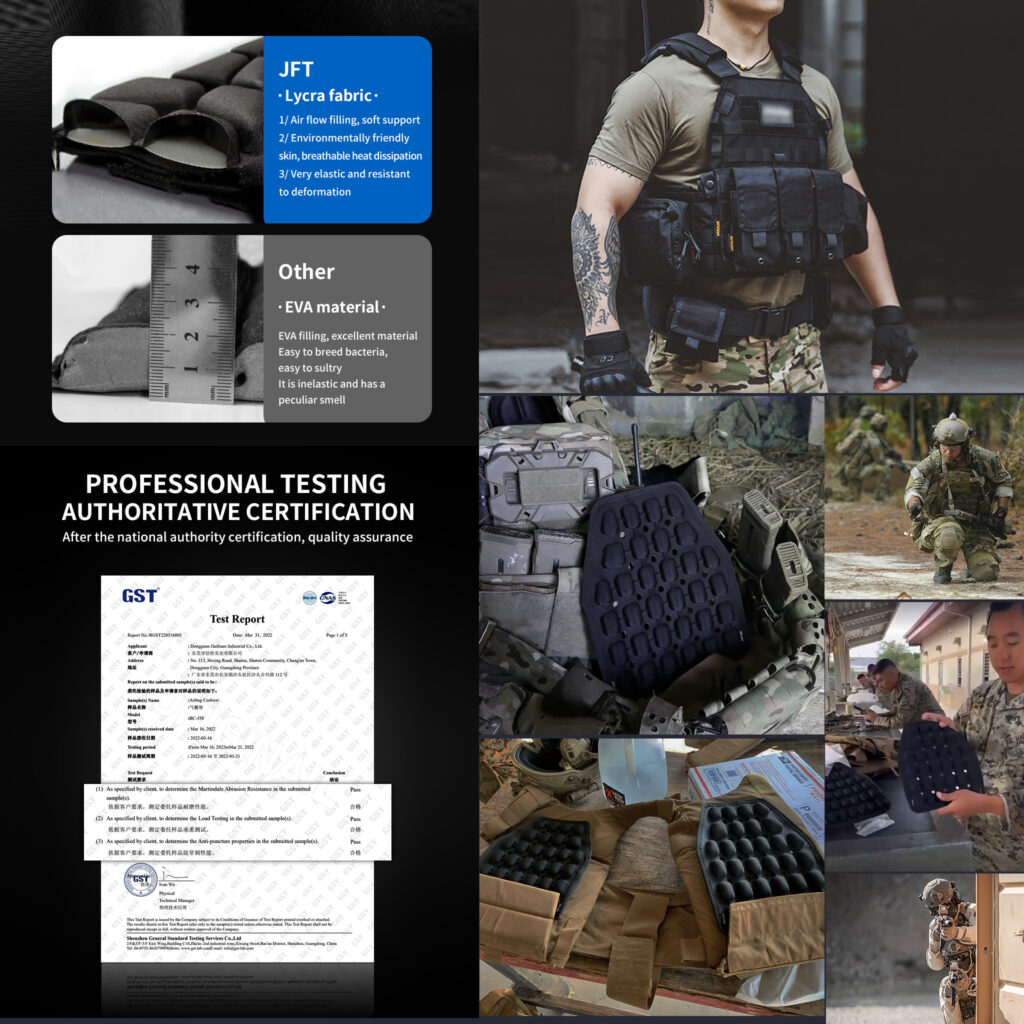
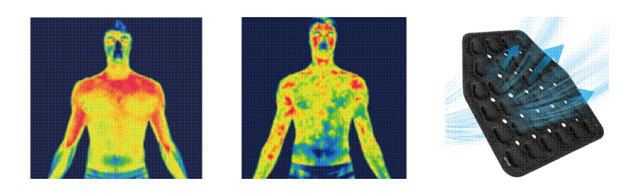
Dynamic air convection technology works on the principle that interconnected air chambers, when compressed by movement or impact, force air to circulate through a network of micro-channels. Unlike static foam or mesh, the system responds to the wearer’s movement. Every step, every shift in posture, every breath creates airflow. The harder the work rate, the more the system circulates air.
This approach delivers three measurable benefits simultaneously:
Cooling and ventilation. Air moves continuously across the skin surface, allowing sweat to evaporate naturally. Core temperature rises more slowly, and officers maintain cognitive and physical performance longer into a shift.
Blunt force trauma reduction. The same air-cell network that circulates cooling air also disperses kinetic energy from impacts. Rather than concentrating force on a single point of the torso, pressure is redistributed across the full surface area of the vest in milliseconds. This directly addresses the backface deformation problem that causes internal injuries even when a ballistic plate stops a round.
Pressure relief. Traditional shoulder straps and waist belts create concentrated pressure points that cause fatigue and circulation problems over long wear periods. Air convection padding continuously redistributes load, preventing the “hot spots” that build up over hours of wear.
What This Means for Procurement Teams
If you are responsible for equipping police officers, military units, or tactical response teams, the thermal management question is no longer optional.
Here is what to ask any armor or padding supplier:
- What is the tested reduction in core body temperature rise over a 4-hour wear period? Ask for data, not claims.
- Does the cooling mechanism work passively, or does it require power? Field reliability depends on the answer.
- Does the system retain its effectiveness under compression? Static foam and mesh do not. Dynamic systems must.
- Does the padding also address blunt force trauma? In 2026, there is no reason to separate these two functions.
- Is the technology patented? Patents indicate validated, independently reviewed engineering — not marketing.
The Singapore Police Force Experience
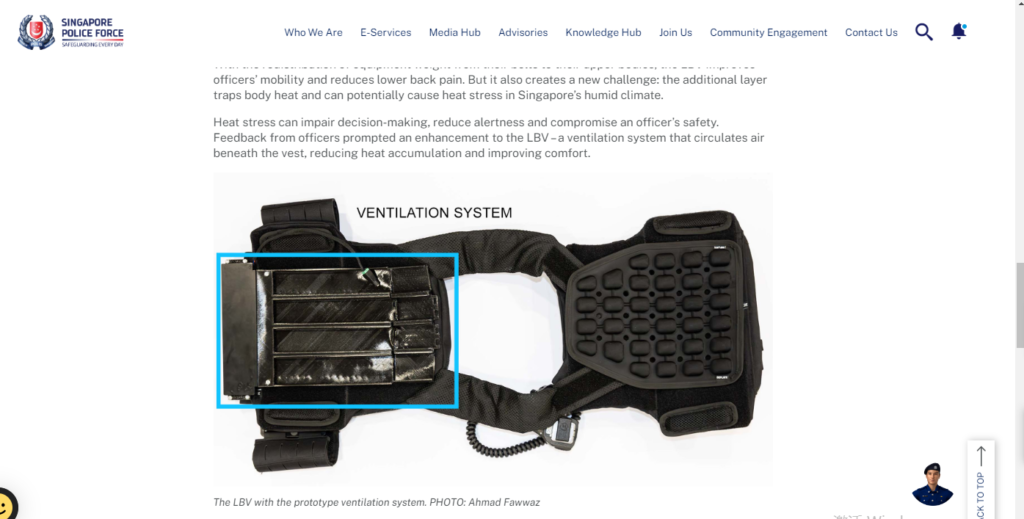
When the Singapore Police Force trialled the JFT SHOK tactical air cushion system, their primary focus was operational efficiency — specifically, whether the system could reduce heat stress and physical fatigue during extended patrol duty.
The results supported integration into standard load-bearing vest configurations, with officers reporting measurable improvements in comfort during long operational shifts.
Singapore’s climate — consistently high humidity and temperatures above 30°C — represents one of the most demanding environments for body armor wearers in the world. If a system performs there, it performs anywhere.
Body armor in 2026 is no longer just about stopping a projectile. The sector has recognised what operators have known for years: a vest that protects you from bullets but incapacitates you with heat is only doing half its job.
Air convection technology represents the most significant advance in tactical vest comfort and secondary protection in the past decade — because it solves two separate problems (heat and trauma) with a single passive mechanism, with no batteries, no electronics, and no moving parts to fail.
The best body armor is the armor you can wear all day, every day, at full cognitive and physical capacity.
That standard is now achievable.
JFT SHOK develops patented air convection padding systems for ballistic vests and plate carriers, serving police forces, military agencies, and tactical gear manufacturers worldwide. View product specifications →